
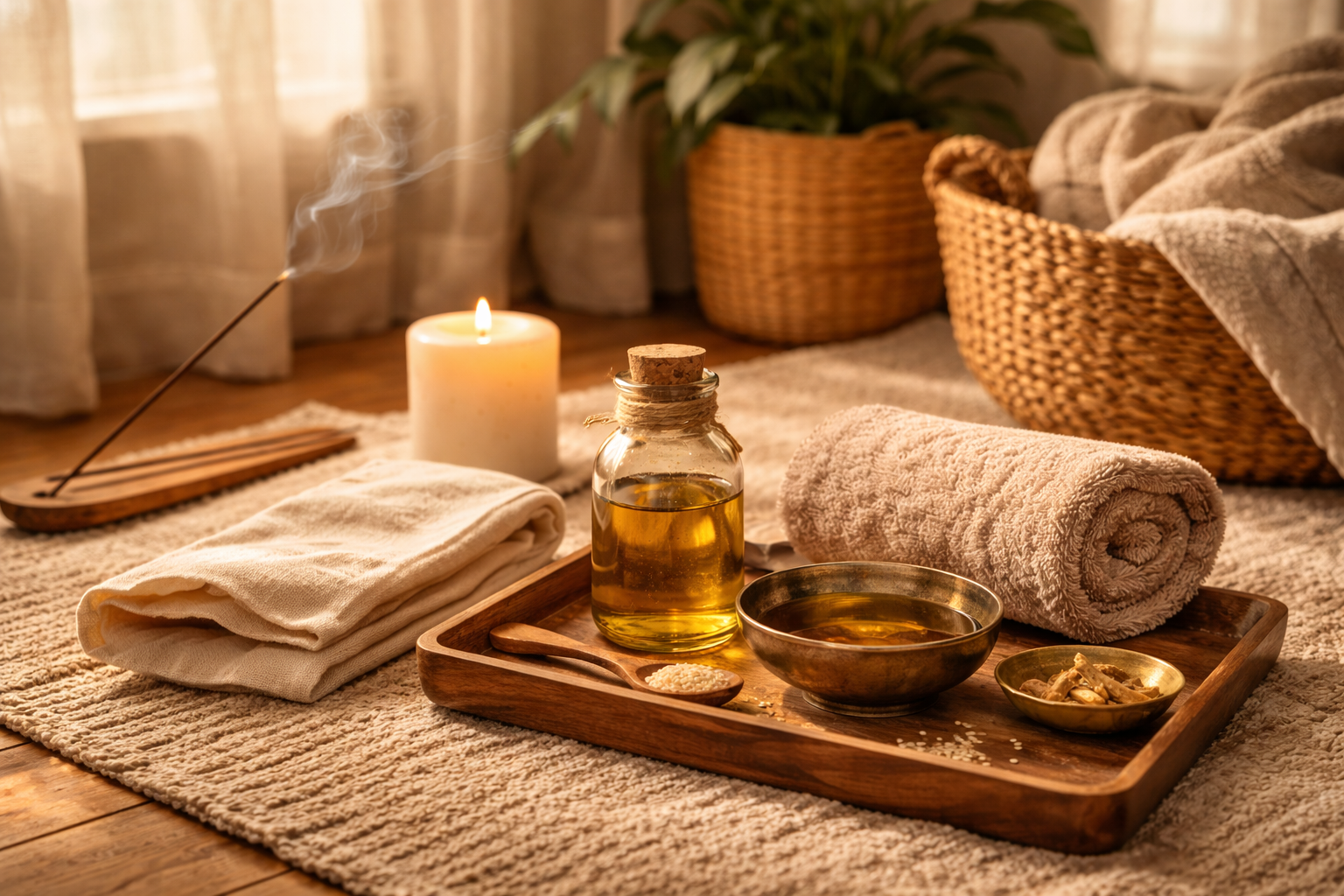
Abhyanga in winter becomes especially relevant when cold mornings bring stiff joints, dry skin, shallow sleep, and a mind that feels more restless than calm. Long before we name the season, the body begins asking for warmth, grounding, and steadiness.
In Ayurveda, these seasonal signals are not random. They are invitations to respond with practices that restore softness, stability, and inner heat. Abhyanga, the traditional Ayurvedic oil massage, is one of the most effective ways to meet winter’s challenges—offering warmth to the tissues, steadiness to the mind, and deep nourishment to the whole system.
warmth, touch, and rhythm, this practice reminds us that balance is often restored not by doing more, but by tending gently to what the body is already asking for.
Why Abhyanga in Winter Matters
Winter’s cold and dry qualities tend to slow circulation, dry out the skin, and increase physical tension. Over time, this may show up as stiffness in the joints, fatigue, or a feeling of being less resilient to daily stress.
Abhyanga in winter works as a direct antidote. Warm oil penetrates the skin and tissues, helping the body retain heat, soften stiffness, and create a sense of containment. Rather than pushing through the season, this Ayurvedic oil massage invites us to meet winter with care.
From this place of gentleness, Abhyanga begins to reveal its deeper effects—not only on the body, but also on the mind and emotional state.

The Effects of Abhyanga on Body and Mind
Abhyanga acts on multiple levels at once, which is why it has been valued for centuries as part of the Ayurvedic daily routine.
Physically, it nourishes dry skin, supports circulation, and helps maintain mobility and warmth in muscles and joints. Emotionally and mentally, it soothes the nervous system, reduces mental overactivity, and encourages deeper, more restorative sleep.
Over time, this regular self-touch builds a sense of safety and grounding that carries into daily life. This sense of stability becomes especially important in winter, when the body’s natural reserves are more easily depleted—an experience often addressed through Ayurvedic Remedies for Stress and Anxiety: Inner Calm, where gentle, regulating practices support emotional balance from within.
Supporting Immunity Through Abhyanga
Frequent colds, lingering fatigue, low resilience to stress, dry or dull skin, and a general sense of depletion are common signs that the body’s reserves are running low during winter. When energy is constantly spent adapting to cold, irregular schedules, or emotional pressure, the system becomes more vulnerable and slower to recover.
Abhyanga supports immunity by conserving energy and nourishing the tissues. The slow, rhythmic nature of the massage calms the system, allowing the body to focus on repair and regeneration rather than constant adaptation.
This is one reason Abhyanga is traditionally recommended as a preventive practice, not only a remedy.
Choosing the Right Oil for Abhyanga in Winter
To receive the full benefits of Abhyanga in winter, the choice of oil is essential. During colder months, oils should be warming, grounding, and deeply nourishing.
- Sesame oil – the classic winter oil; warming, stabilizing, and protective
- Almond oil – nourishing and strengthening, especially for very dry skin
- Ashwagandha-infused oil – supportive for stress, fatigue, and nervous tension
- Bala oil – ideal for weakness, joint discomfort, or stiffness
Always warm the oil gently before use. The sensation should be comforting and enveloping, never hot.
With the right oil prepared, Abhyanga becomes a simple ritual that can easily be practiced at home.
A Simple Abhyanga Practice at Home
Abhyanga does not need to be elaborate to be effective.
- Choose a warm, quiet space
- Warm 2–4 tablespoons of oil using a double boiler
- Apply the oil slowly, beginning with the limbs and moving toward the torso
- Use long strokes on arms and legs, circular motions on joints
- Massage the abdomen gently in a clockwise direction
- Allow the oil to rest on the body for 10–20 minutes
- Finish with a warm shower, using minimal soap
Even a short, consistent practice can create noticeable changes.
Over time, Abhyanga naturally evolves from a technique into a personal ritual of care.
Abhyanga as a Winter Ritual
Beyond its physical benefits, Abhyanga offers a moment of intentional pause. In a season that naturally asks us to slow down, this Ayurvedic oil massage becomes a way of listening inward—responding to the body rather than overriding it.
Practiced regularly, Abhyanga cultivates warmth not only in the tissues, but also in the emotional landscape, reinforcing calm, steadiness, and self-connection.
Closing Reflection
Winter does not require endurance alone—it asks for nourishment. Abhyanga in winter offers a simple, time-tested way to meet the season with presence and care.
Through warmth, touch, and rhythm, this practice reminds us that balance is often restored not by doing more, but by tending gently to what the body is already asking for.