
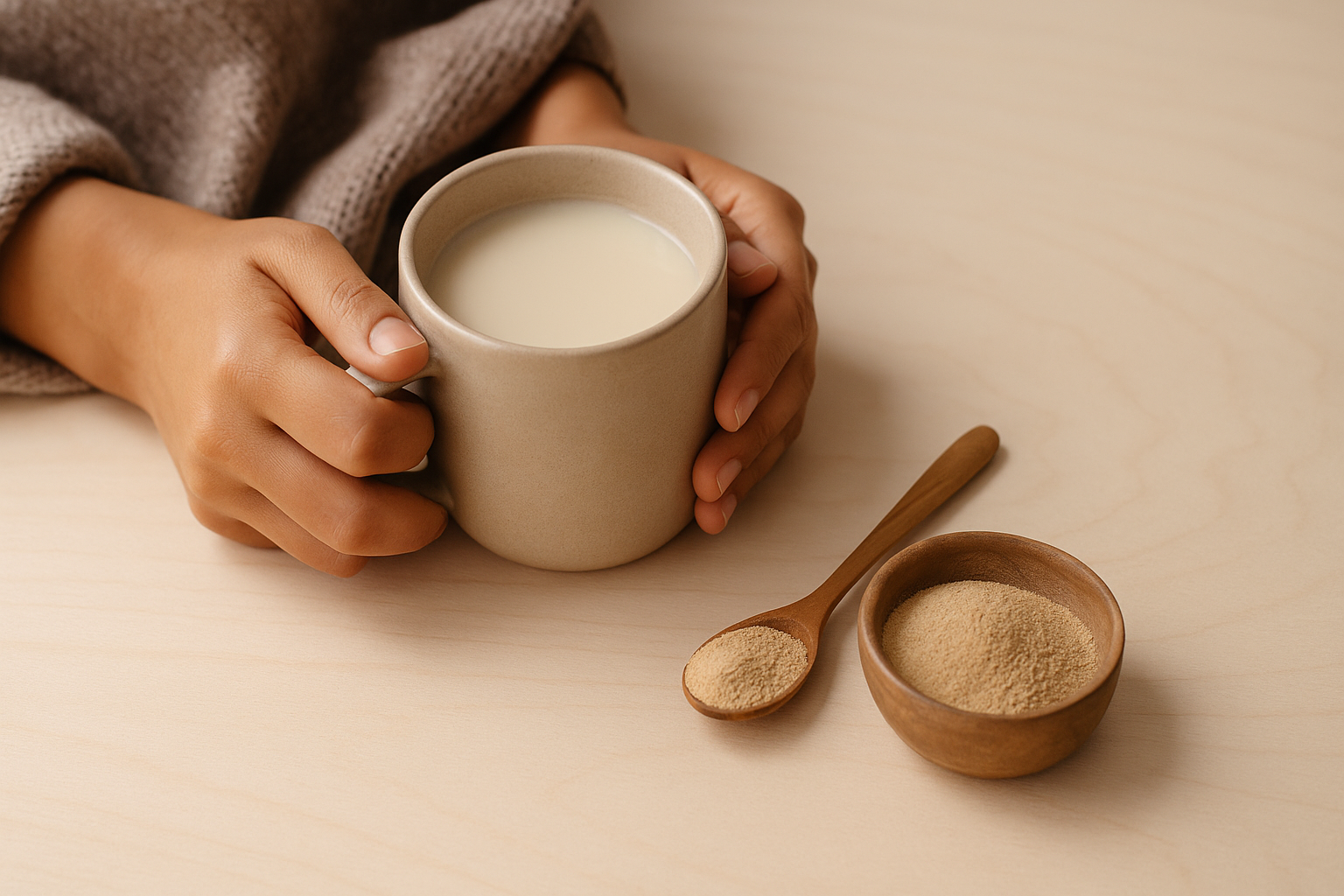
Have you ever felt tired even after resting? Or noticed your mind racing at the end of the day, with exhaustion slowly building over time? In Ayurveda, these experiences are not seen as failures of the body. Instead, they are clear signals that the body needs more nourishment, stability, and care.
Within this perspective, Ashwagandha in Ayurveda holds a special place as one of the most widely used herbs when both the body and mind need deeper support.
Ashwagandha, traditionally known as Withania somnifera, is classified as a rasayana. In Ayurveda, this means it supports long-term rejuvenation, strength, and balance. Unlike stimulants, it does not aim to energize or force quick results. Instead, its action is gentle and sustained, helping the body return to equilibrium after prolonged physical, emotional, or mental stress.
How Ashwagandha in Ayurveda Works
To understand Ashwagandha in Ayurveda, it is important to look at its energetic qualities. This herb has a warming, grounding, and nourishing nature, with both bitter and sweet tastes. Because of these characteristics, it is especially helpful for balancing Vata dosha, which is associated with movement, mental activity, irregularity, and nervous exhaustion.
For this reason, Ashwagandha helps calm the nervous system without weakening it, while also strengthening the body without overstimulation. Traditionally, it is said to nourish deeper tissues such as the nervous system (majja dhatu), the muscles (mamsa dhatu), and the reproductive tissue (shukra dhatu). As a result, it is commonly used during periods of depletion, recovery, or general weakness.
Traditional Benefits of Ashwagandha
In Ayurvedic practice, Ashwagandha is used to support processes related to:
- Ongoing stress and mental tension
- Difficulty relaxing or achieving restful sleep
- Persistent physical or emotional fatigue
- Reduced energy or endurance
- Nervous system support
- Balance within the reproductive system
Its effects are gradual and cumulative. Ayurveda teaches that lasting balance develops over time, through consistency and mindful self-care rather than quick solutions.
Conscious Use and Dosage
In Ashwagandha in Ayurveda, there is no single dose that fits everyone. Instead, the appropriate amount depends on constitution, digestion, life stage, and current state of balance. In general:
- Powder (churna) is taken in small amounts and is often combined with warm water to enhance its nourishing qualities.
- Capsules or tablets provide a convenient option for daily use.
- Liquid extracts allow for more precise dosage adjustments and closer observation of the body’s response.
People with a Vata predominance often benefit from taking Ashwagandha with warm, nourishing carriers. However, for Pitta or Kapha constitutions, it is best to start with smaller doses and adjust based on individual response.
How to Use Ashwagandha in Ayurveda in Daily Life
Ashwagandha works best when combined with simple habits that support balance, such as warm meals, adequate rest, regular routines, and moments of calm. Rather than “fixing” the body, its purpose is to support the body’s natural capacity to regulate and recover.
From an Ayurvedic perspective, well-being begins when we stop constantly pushing ourselves and begin listening more carefully. Ashwagandha in Ayurveda can gently support this process, offering steady and conscious nourishment over time, and you can include ayurvedic Habits that will transforme your life to add wellnes.