
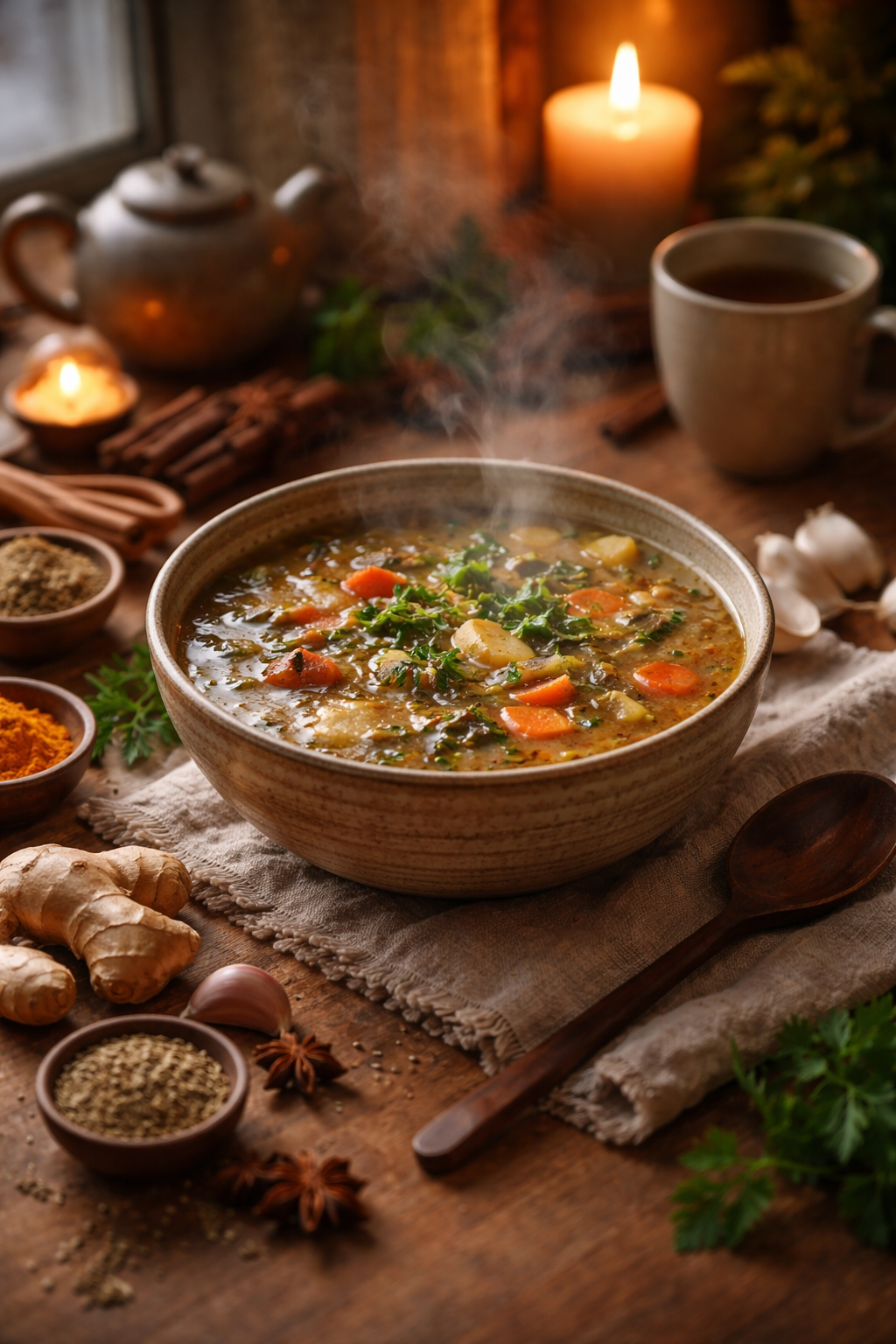
Ayurvedic foods for winter play a key role in supporting digestion and immunity during the colder months. Winter is a season of cold, dryness, and stillness, and from an Ayurvedic perspective, these qualities naturally increase Vata dosha, which can weaken digestion, lower immunity, and leave us feeling tired, bloated, or out of balance.
Choosing the right Ayurvedic foods for winter is one of the most effective ways to stay balanced during this season. By prioritizing warm, nourishing, and grounding foods, we support Agni (digestive fire), protect Ojas (the essence of vitality and immunity), and help the body adapt smoothly to seasonal changes.
Why Ayurvedic Foods for Winter Support Digestion and Immunity
In Ayurveda, winter is primarily influenced by Vata dosha. Cold, dry, light, and irregular qualities directly affect digestion, making Agni unstable.
When digestion weakens, nutrients are not properly absorbed and immunity gradually declines. This explains why winter often brings symptoms such as gas, bloating, dry skin, fatigue, joint stiffness, and frequent colds.
A seasonal diet centered on Ayurvedic foods for winter counterbalances these qualities by emphasizing warmth, nourishment, healthy oils, and regular eating routines.
Best Ayurvedic Foods for Winter
Warm, Cooked, and Nourishing Foods
During winter, Ayurveda strongly recommends warm, freshly prepared meals. Soups, broths, stews, vegetable creams, and kitchari are easy to digest and deeply nourishing.
These foods help stabilize Vata, strengthen digestion, and provide steady energy without overloading the digestive system. Slow-cooked meals are especially beneficial, as they carry grounding and comforting qualities ideal for cold weather.
Healthy Fats That Nourish Ojas (Vegetarian Approach)
Healthy fats are essential during winter because they nourish tissues, counteract dryness, and support Ojas, the subtle essence related to immunity and vitality.
In a vegetarian Ayurvedic diet, recommended sources include:
- Sesame oil (ideal for cooking and stews)
- Olive oil (used in warm preparations)
- Coconut oil in small amounts
- Soaked almonds and walnuts
- Tahini (sesame paste)
These fats help calm the nervous system, support tissue nourishment, and sustain energy throughout the colder months—without relying on animal-based products.

Spices That Boost Digestion and Immunity
Spices play a central role in the Ayurvedic winter diet. They kindle Agni, improve circulation, and help maintain internal warmth.
Some of the most beneficial spices for winter include:
- Fresh ginger
- Turmeric
- Cumin
- Cinnamon
- Black pepper
- Cardamom
When used in moderation, spices enhance digestion and strengthen immunity without overstimulating the system.
Winter Vegetables That Ground Vata
Root vegetables and naturally sweet winter produce help balance Vata’s light and dry qualities.
Excellent choices include:
- Carrots
- Sweet potatoes
- Beets
- Squash
- Pumpkin
- Turnips
These vegetables are grounding and nourishing, and they are best enjoyed cooked, roasted, or in soups to support digestion and warmth.
Foods to Reduce During Winter
To protect digestion and immunity, Ayurveda advises limiting foods that increase coldness and dryness during winter.
It is best to reduce:
- Cold or iced foods and drinks
- Raw vegetables and salads
- Dry snacks and crackers
- Refined sugar
- Excessive caffeine
Reducing these foods helps prevent digestive imbalance and seasonal fatigue.
Simple Tips to Include Ayurvedic Foods for Winter
Small daily habits can make a significant difference during winter:
- Eat warm meals at regular times
- Favor cooked foods over raw
- Sip warm water or herbal teas throughout the day
- Avoid prolonged fasting
- Choose nourishing comfort foods rather than restrictive diets
Winter is not a season for deprivation, but for deep nourishment and restoration.
Final Reflection
Winter invites us to slow down, turn inward, and care for the body with greater intention. By choosing the right Ayurvedic foods for winter, we strengthen digestion, support immunity, and build a stable foundation of energy and resilience.
Nutrition is only one part of seasonal care. Supporting Immunity Naturally with Ayurvedic Herbs can further enhance resilience and help the body adapt gently to winter’s challenges.
Eating in harmony with the seasons is one of Ayurveda’s most valuable teachings—and winter is the perfect time to put it into practice.